In the run-up to the new single “Lost In the Highlights”, and before they embark on their autumn UK Tour, I sat down with Ross, guitarist for the Canadian southern rock stars The Commoners. In this interview, we talk about writing new music and nerd out about guitars. This was such a fun chat. Read on!
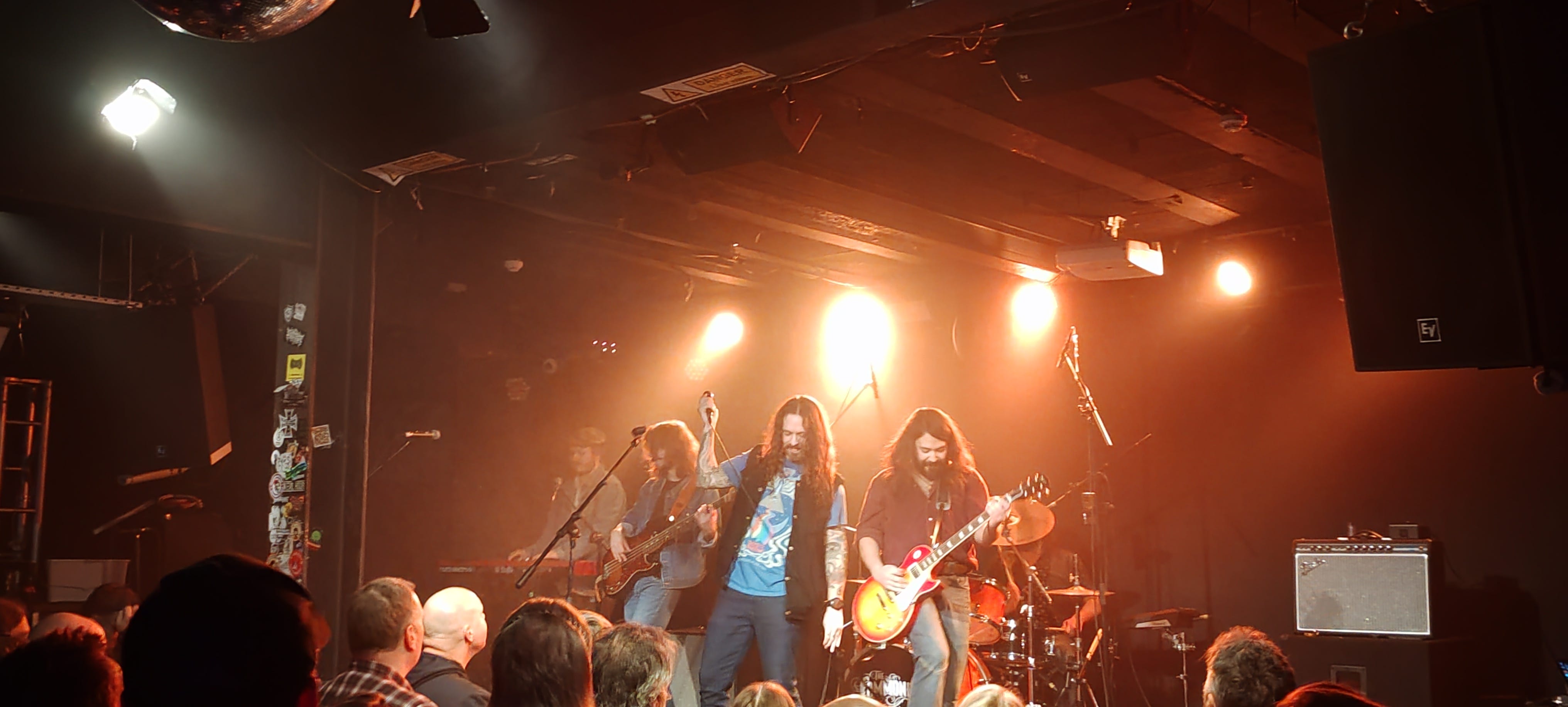
Mick: You’re coming back to the UK for a decent, lengthy tour, and you seem to be making yourselves quite at home. Is there something special about UK audiences that you really enjoy performing for?
Ross: I think they get the rock music that we do, whatever you consider us, southern rock or roots rock. It’s in that world where it’s not the super traditional hard rock bands you see out there. The special thing we do is bring the soul to the rock, with the backing vocals and the grooves we put down, but obviously it’s still rock and roll.
I think UK audiences resonate with that more. We’re bringing this cool soul element, and because it originally came from the UK anyway, the audiences see that and go, “I get it,” and they come out to the shows. We’ve had radio success there, which helps, but the biggest thing is that the crowds are engaged. They come out and love the songs. They’re rowdy, they party, they want to dance and hang out, and that’s why we love coming back.
Mick: Perfect. I can attest that you were great last time I saw you in Manchester, and I’m looking forward to seeing you again. You’ve also got your new album in the works. What’s been the biggest difference in the writing process from the last record?
Ross: We looked at the first album, Find a Better Way, and did a little market research: what did people actually like from that one? That album had a fuller sound, but it also had some really rootsy elements, like the Tedeschi Trucks Band, songs like “I Won’t” and “Hangin’ On Again.”
We looked at the layout of what we’d done, because we felt we could incorporate some of those elements. We asked ourselves what people liked best, then curated the next album, Restless, to be a little closer to the songs that stream and perform best online, at shows, and everywhere in between. Then we did that again with this next batch of songs. We thought, “This is what they really like,” and we honed in on those real soul elements in the rock. The Hammond organ is still there, but so are the backing vocals. Female backing vocals are a big part of our studio sound, and we try to write tracks where they’re a feature. We know that with a great chorus, the female backing harmonies will add to it in the studio. When we go live, we can’t always bring the backing singers, so we have to ask ourselves whether we can still pull it off with the five of us. We try to pick the songs where we can do both.
Mick: Definitely. It’s going to be a lot more challenging coming up with set lists with a whole new album, because it’ll be hard splitting the difference between the hits everybody liked from the records and then splicing in the new stuff.
Ross: I think we’re just going to play longer.
Mick: That’s an answer: just play longer! Why not three-hour sets? I want to talk about playing live. One thing I’ve noticed is your guitar work. When I hear the songs on record and then see you play live, something clicks. It’s like, “Oh, that’s how he accomplishes that part,” particularly the slide guitar elements or the double-neck guitar. When bringing the studio sound to the stage, what do you find most challenging about translating it to a live set?
Ross: There are two things. The obvious one is that Chris is such a dynamic frontman that when he’s behind a guitar, it takes away a bit from what he’s able to do as a frontman. So as a five-piece, we only have him play guitar on the songs that are integral for a two-guitar setup.
There are a lot of songs where there are two guitar parts on the record but we go with one live. For example, “Gone Without Warning” from the Restless album is a track we love playing live. The studio version has two guitar parts. It’s a dueling-guitar kind of thing, supposed to sound like Keith Richards and Ronnie Wood. When we go live, the dynamic energy of Chris as a frontman matters more on a song like that than the second guitar, so I have to do both. That ends up being a bit tricky, especially if you watch that track: you play the lead, then you play the rhythm. It’s tough, but Jimmy Page did it his entire career. He never had anyone else up there, and I think he said something along the lines of, “It would have been nice to have another guitar player, but I had to do it all myself.” We’re not on the level of Zeppelin, but I feel the same way. It’s nice to be able to cover both, but it’s a lot of work.
The other thing is tone and production. We play Neural DSP Quad Cortex units live, and it’s the closest thing I’ve ever seen to a real tube signal, the actual input stage of a HIWATT amp into a giant cab. But it doesn’t need to be repaired every other day when the tubes go down. That was a big thing we evolved with the set. We took the studio tones we’d created with real amps, the HIWATTs, Fenders, the Marshalls, everything we use in the studio to make the tracks happen, and I captured those sounds with the Neural DSP. You can actually capture things, so I created a guitar tone for each song and made a profile of it. What we’re playing live is the exact profile of what we’re hearing on the recording. That was the eureka moment for me: I could take this show on the road and have it sound like the studio.
Mick: Definitely. The double-neck guitar I found interesting, because one’s a 12-string and one’s a six-string. How does your brain actually coordinate between the two necks?
Ross: The trick is that the 12-string is usually tuned differently from the six-string. Take the song “Too Much,” for example. I play the rhythm and the lead line on the 12-string in open G, and when it comes to the solo, I flip up to the six-string, which is in standard tuning so I can get the full solo range. Then I flip back to the 12-string for the open-G rhythm parts. That lends itself more to slide guitar, because you can barre with an open tuning and it’s a lot easier to move around, and then I can solo on the six-string the way I learned to solo. That was the original thinking behind being able to switch between the two. It’s a flavour thing too. The 12-string has a much brighter tone, so you can get a bit more of that swampier blues sound, and then go back to the six-string and have both.
Mick: Definitely, because I have both. I have a 12-string acoustic and a six-string acoustic, and you get a brighter tone with the 12-string, like the Eagles. It’s something that’s always puzzled me, but that makes a lot of sense.
Ross: It’s like the heroes again. You mention the Eagles: Don Felder had the white one, and Jimmy Page had the red one, which is what I’m more used to playing.
For “Stairway to Heaven,” he had a six-string part and a 12-string part. The 12-string comes in from the second verse onwards, until the solo. And for “The Song Remains the Same,” he’d play that on the 12-string, and then, without switching guitars, go straight into “The Rain Song” on the six-string and make a medley out of it. He had two separate tunings on the two necks so he could flip between them, and there’s also some sympathetic resonance that comes from it.
Because it’s a double-neck, you can actually have both necks active at the same time, which is a sort of hidden gem. It’s almost like a sitar, with drone strings. If you’re playing something on the six-string neck and have the 12-string neck active, you can blend in that resonance, and it creates this almost ethereal tone, a kind of drone, especially in an open tuning. You can do some really cool studio tricks with that, which I wanted to do on a few albums, but it never really translated directly. I’ve got a place for something like that on the new one, which I’m excited about.
Mick: I can’t wait to hear that!
Ross: It’ll be cool. It’s a track called “Searching,” which we’ve been playing live, but it’s one of those that lends itself so much to the room. I think it will be really cool to play with. We haven’t done that yet.
Mick: That’s another reason I’m very excited to get my hands on this new record. You’ve left us waiting a while.
Ross: It’s taken a while to get all the pieces together. Like I said, we’ve been trying to write songs that live in the world I was describing earlier, and it’s tough, because everybody writes what they feel like in the moment, and not everything fits that model and mindset. We’ve probably written 30 songs since we put out Restless, 30 tracks that we’ve been playing with, and they don’t all fit. We’re really trying to curate the best album possible, so it’s not like all 30 make the record. You write 30 and maybe six make it.
Mick: That sounds like an insane process. How do you decide which songs end up on the record and which ones get cut?
Ross: There’s always an element of time to it. Back in the day, and I’m not even talking about the ‘70s, I’m talking about 10 to 15 years ago, a musician could be a musician full-time, because the budgets were there to allow an artist not to have a day job. Those things have gone away. A lot of people have to work or have other things that keep them from being full-time musicians, you don’t have all the time in the world to explore every idea. So you write base ideas, base concepts, and you try them. If they don’t work immediately, you ask yourself whether it’s worth spending a week trying to develop an idea that isn’t immediately the thing. You think, “That’s a cool idea, we worked on it for a couple of hours, but I can see it’s not going to be the next big hit.” So you say, “We’ll come back to this,” and you leave some ideas on the table. You end up with all these songs that aren’t incomplete, exactly, but aren’t fully worked out, and you’d have to go back in and readjust them. So when you’re in the lab working, you’ve got to pick the things that make the most sense to put forward, and that’s where the QC factor comes in.
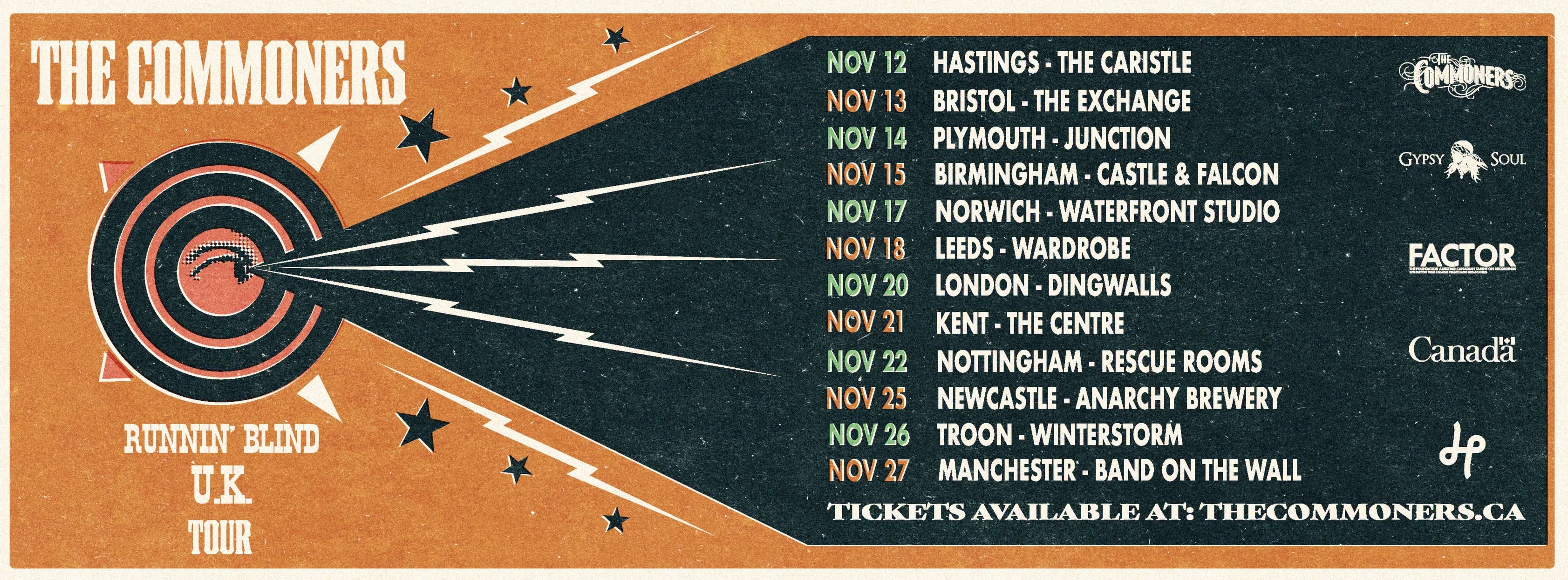
Mick: You’re coming over here to play the Winterstorm Festival in Scotland in November, and you’ll be sharing the stage with a lot of big names like FM. Are there any dream bands you’d love to tour with right now? Anyone currently touring that you’d love to be on the bill with, whether as support or headliner?
Ross: Everybody we’d want to work with, we’d be opening for, which is totally fair. I’ve got a long list of bands. I’d love to open for the Black Crowes, obviously. I’d love to open for Blackberry Smoke or Dirty Honey, or play great events like these. These rock bands are doing their thing and have the southern rock audience, and they have the audience we want to play to, and I know they’d love what we do. It would be great to open for a band like Rival Sons as well, who are one of my favourites.
Mick: Absolutely. This is my last question, and I ask everybody this one. It’s personal rather than professional: what’s the hardest thing you’ve had to overcome, and how did you overcome it?
Ross: Probably stage fright. When you’re in a rock band, people assume you have confidence, since you’re out there every day performing and talking to people. But when I first started, I was very nervous getting on stage. I’m an overthinker, which I think is also what makes me a good producer. I’m always thinking about backup plans and what the alternative is if something breaks. A lot of my stage fright was actually tech-related: what happens if a string snaps? How do I recover from that? If an amp breaks, what do I do? Most musicians have to overcome that in some capacity.
We had a viral video last year from when we played Sweden Rock. There were around a hundred thousand people at the festival, and maybe 20,000 in front of us, so it was still a big crowd. During the last song, my wireless rig cut out. In that moment I panicked, because we’d done all the prep work and suddenly there was no guitar. Our singer, Chris, saved the day with a backup patch cord, and he kept singing while we got things going again. We didn’t miss a beat, and the crowd went wild when the guitar came back in. I still think about that moment every time I go on stage: it could happen again, so what’s the backup plan? That’s what creates the nervousness. The way I overcome it is by always having that backup plan in place, and that’s what gets me past the nerves.
Mick: Definitely, that absolutely makes sense. I really enjoyed our little chat. Thanks so much for your time, and I look forward to seeing you guys in Manchester.
Listen To The New Single "Lost In The Highlights" Here
Comments
Post a Comment